Shopping cart

Subtotal 0

View cartCheckout

Cervical Cancer Screening Jodhpur

Don't Wait for Symptoms,
Get Screened Today

Cervical cancer screening detects early cervical changes before they become dangerous, often before any symptoms appear. Regular screening through Pap smear and HPV testing can identify risk at a stage where treatment is simpler, safer, and far more effective. At Galwa Care Hospital, Jodhpur, we provide private screening, vaccination counselling, result interpretation, and specialist follow-up in a supportive setting. This simple preventive step can protect long-term health and may be life-saving for women.

Are You Facing These Issues?

Free Consultation
from our Consultants

Every Woman Needs to Know This

Who Needs Cervical Cancer Screening?

Cervical cancer screening is recommended for all women within the appropriate age range, with
specific guidance varying based on age, vaccination status, health history, and individual risk factors.

Women Aged 21 to 29 Years

A Pap smear is recommended every 3 years from the age of 21 regardless of sexual activity history. This age group benefits most from early establishment of a regular screening routine before any cellular changes develop.

Women Aged 30 to 65 Years

A Pap smear every 3 years, or combined co-testing with the HPV DNA test every 5 years, is the recommended approach. Co-testing provides the most comprehensive cervical cancer risk assessment currently available.

High-Risk Women Requiring Annual Screening

Women with HIV, a history of cervical abnormalities, immunosuppression, or a previous abnormal Pap smear result require more frequent annual screening regardless of age, as their risk of developing cervical changes is significantly elevated.

Post-HPV Vaccination Women

Vaccinated women must continue regular Pap smear and HPV DNA screening as the vaccine does not protect against all cancer-causing HPV strains. Vaccination and screening are complementary and both remain essential.

Women with an Abnormal Previous Result

Any woman with a prior abnormal Pap smear result, borderline findings, or detected high-risk HPV infection requires closer monitoring with more frequent screening intervals and possible referral for colposcopy.

Women After Hysterectomy or Aged 65 and Above

Women aged 65 with three consecutive normal results and no history of high-grade abnormalities may discontinue screening on specialist advice. Women who had a hysterectomy for non-cancerous reasons should seek guidance on whether continued screening is required.

What to Expect During Your Screening

The Cervical Cancer Screening Procedure

Cervical screening is a quick, private and preventive procedure that detects abnormal cervical cells or high-risk HPV before cancer develops.

Preparation

Avoid intercourse, vaginal medicines, tampons and douching before the test when advised. Mid-cycle timing often helps improve sample accuracy.

Privacy & Positioning

The examination is done in a private setting with dignity and support, usually taking only a few minutes from positioning to sample collection.

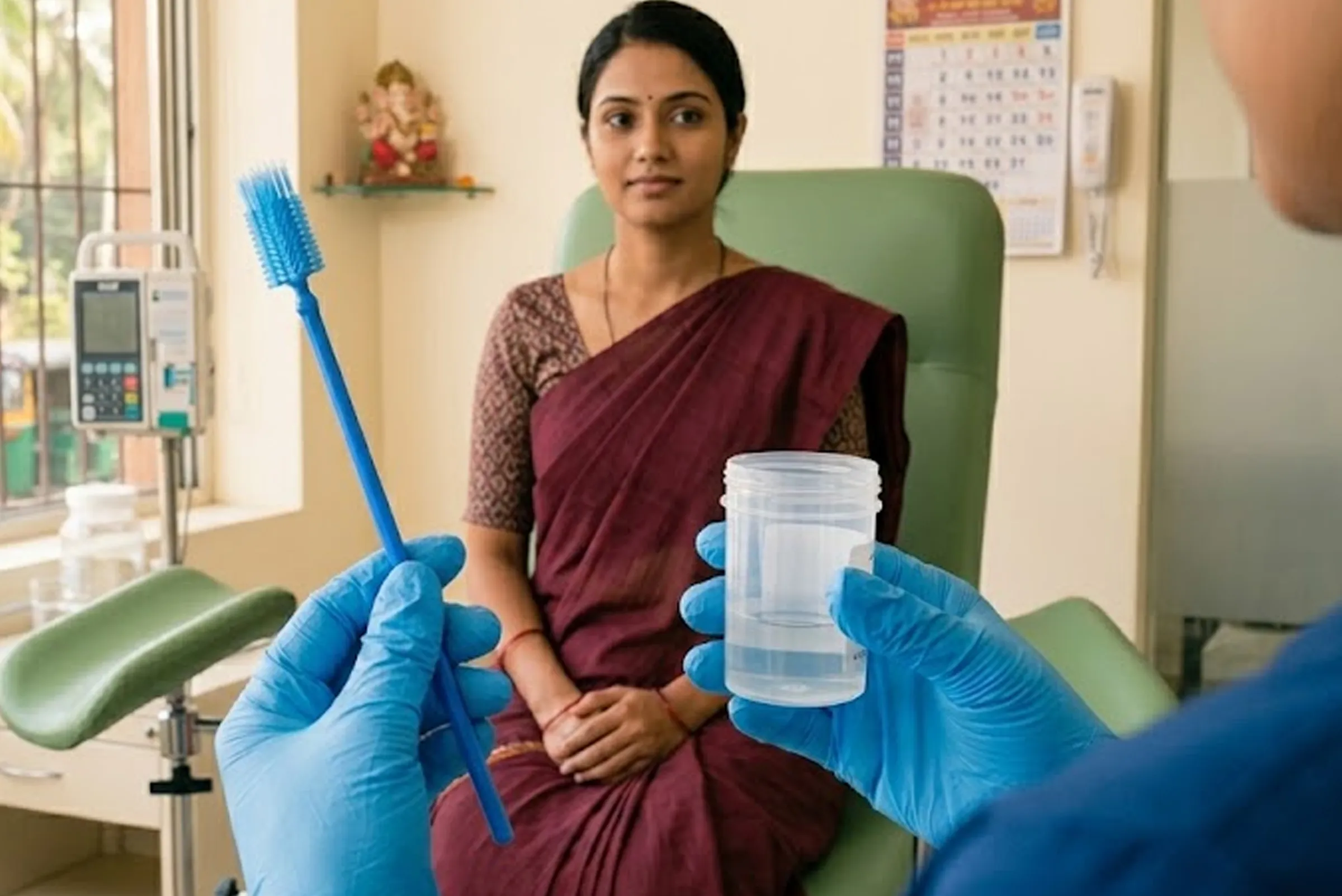
Speculum Examination

A lubricated speculum is gently inserted to view the cervix clearly, allowing the specialist to collect the sample safely and accurately.

Cell Sample Collection

A soft brush or spatula collects cervical cells within seconds. Most women feel only mild pressure or brief discomfort.

Laboratory Testing

The sample is processed for Pap smear cytology and/or HPV DNA testing to detect abnormal cells or high-risk viral strains.

After the Test

Mild spotting can occur briefly and is usually normal. Results are reviewed once available, with clear explanation from your specialist.

Results & Next Steps

Normal results guide future screening timing; abnormal findings may require repeat testing, HPV review or colposcopy for closer assessment.

Early Detection Saves Lives, Every Time

Benefits of Regular Cervical Cancer Screening

Regular cervical cancer screening is the most effective and evidence-backed preventive healthcare action a woman
can take, offering the strongest possible protection against one of India's most common and preventable cancers.

Detects Changes Before Cancer Develops

Identifies pre-cancerous cervical cell changes at the earliest and most treatable stage, long before any symptoms appear and when intervention is simplest, safest, and most clinically effective.

Dramatically Reduces Cervical Cancer Mortality

Regular screening has been credited with dramatically reducing cervical cancer death rates in countries where established programmes are in place, making it one of the most life-saving public health tools available.

Identifies High-Risk HPV Before Cellular Damage

The HPV DNA test detects the presence of cancer-causing viral strains before any visible cellular abnormality has developed, providing the earliest possible warning of elevated cervical cancer risk.

Enables Minimally Invasive Early Treatment

Pre-cancerous lesions detected through early screening can be treated with simple, minimally invasive procedures that prevent progression to invasive cancer, surgery, chemotherapy, or radiation entirely.

Provides Genuine Peace of Mind

A normal screening result provides clinical certainty and complete peace of mind, confirming low cervical cancer risk and allowing women to continue their lives with full confidence in their health.

Reduces Need for Aggressive Cancer Treatment

Through early-stage detection, screening dramatically reduces the need for intensive treatments such as radical hysterectomy, chemotherapy, and radiation that advanced cervical cancer requires.

Empowers Informed Health Management

Regular screening empowers women to take active, informed control of their long-term reproductive and overall health, making them active participants in their own cancer prevention rather than passive observers.

Cost-Effective Preventive Healthcare

The cost of regular screening is a small fraction of the financial, physical, and emotional burden of treating advanced cervical cancer, making it one of the most cost-effective healthcare investments available.

Personalised Screening Intervals

Results guide how frequently each individual woman needs to be monitored, with risk-based personalisation ensuring that higher-risk women receive closer surveillance and low-risk women are not over-screened.

Supports Broader Gynaecological Health

Regular screening prompts consistent gynaecological check-ups that often identify other reproductive health concerns early, contributing to comprehensive women's health maintenance beyond cervical cancer prevention alone.

Simple Steps for Accurate Results

Cervical Cancer Screening — Do's and Don'ts

Following these simple recommendations before and after your cervical screening appointment will ensure the most
accurate test results, the most comfortable experience, and the most reliable cancer risk assessment.

DO'S — What You Should Do

Schedule your Pap smear mid-cycle, around 10 to 20 days after your period begins.

Avoid sexual intercourse for 48 hours before your screening appointment.

Inform your specialist of any current vaginal symptoms, medications, or health concerns.

Attend your results consultation and follow all specialist recommendations carefully.

Continue regular screening even after HPV vaccination as both remain essential.

Maintain your recommended screening interval whether every 3 or every 5 years.

Bring a list of any previous Pap smear results or gynaecological history to your appointment.

Ask your specialist to explain your result clearly so you fully understand its meaning.

Encourage family members and friends to schedule their own cervical screening regularly.

Combine HPV vaccination with regular screening for the most comprehensive cancer protection.

DONT'S — What You Should Avoid

Avoid scheduling your Pap smear during menstruation as blood interferes with cell analysis.

Do not use vaginal douches, tampons, or vaginal medications for 48 hours before the test.

Avoid delaying a repeat test or follow-up if your specialist has recommended one.

Do not assume an abnormal result means you have cancer, it requires further investigation only.

Avoid skipping screening because you have no symptoms as cervical changes are often symptom-free.

Do not discontinue screening after HPV vaccination as the vaccine does not cover all strains.

Avoid missing your scheduled screening interval as consistency is critical for early detection.

Do not feel embarrassed or anxious, your gynaecologist at Galwa Care Hospital ensures complete privacy.

Avoid self-diagnosing based on online information and always discuss results with your specialist.

Do not delay starting screening as the earlier it begins the more complete the cancer protection.

Expert Screening, Private and Compassionate Care

Cervical Cancer
Prevention You Can
Trust Completely

Experienced gynaecologists with specialist expertise in cervical cancer screening and prevention

Both Pap smear and HPV DNA co-testing available for the most comprehensive cancer risk assessment

Certified laboratory partnerships ensuring accurate, reliable, and timely test results

Personalised screening intervals based on individual age, risk profile, and health history

Complete privacy and a judgment-free environment guaranteed at every consultation

Integrated cervical cancer prevention combining screening with HPV vaccination guidance

Clear, detailed result explanation and structured follow-up planning for every patient

2000+

Eggs Successfully Frozen

98%

Vitrification Survival Rate

15+

Years of Experience

24/7

Support to Call

Life-Saving Screening, Accessible Pricing

How Much Does Cervical Cancer Screening Cost?

The cost of cervical cancer screening at Galwa Care Hospital depends on whether a Pap smear alone, HPV DNA test alone, or co-testing combination is selected, and whether additional gynaecological consultation or follow-up investigation is included. All pricing is communicated clearly and transparently upfront.

Easy EMI Facility Available

Pap smear or HPV DNA test selected

Co-testing combination package

Laboratory analysis and reporting

Specialist consultation and result review

Follow-up colposcopy (if indicated)

Ongoing screening schedule planning

Easy EMI Facility Available

Shape Image

Cervical Screening Questions, Clearly Answered

Frequently Asked Questions.

A Pap smear examines the physical appearance of cervical cells under a microscope to detect abnormal cellular changes, while the HPV DNA test analyses the genetic material of the virus itself to detect the presence of high-risk HPV strains even before any cellular abnormalities have developed. The HPV DNA test is therefore a more sensitive early-warning tool for cancer risk. The most comprehensive approach is co-testing, using both simultaneously in a single appointment. Your specialist at Galwa Care Hospital will recommend the most appropriate option based on your age, health history, and individual risk profile.

For most women, a Pap smear causes only mild pressure or brief discomfort during cell collection and is not a painful procedure. It is completed within a few minutes in a completely private setting at Galwa Care Hospital. An abnormal result does not mean you have cancer. It means that some cervical cells look different from normal and require further investigation, such as a repeat test, HPV DNA testing, or colposcopy for closer examination. Your specialist will explain exactly what your specific result means and what the recommended next steps are.

Yes, absolutely. The HPV vaccine does not protect against all cancer-causing HPV strains, so regular Pap smear and HPV DNA screening remains essential for all vaccinated women throughout their recommended screening age range. Vaccination and screening are complementary strategies that work together. It is generally recommended to avoid scheduling a Pap smear during menstruation as blood can interfere with accurate cell analysis. Ideally schedule your appointment mid-cycle around 10 to 20 days after your period begins for the most accurate sample collection.

A positive HPV DNA test means a high-risk strain has been detected in your cervical cells. It does not mean cancer is present. The vast majority of HPV infections clear naturally without causing cancer. However, a positive result indicates the need for closer monitoring and your doctor will recommend appropriate follow-up, which may include a repeat test after 12 months, Pap smear co-testing, or colposcopy for direct visual examination of the cervix. Your specialist at Galwa Care Hospital will guide you through every step of the follow-up process with complete clarity and support.

Cervical cancer screening is generally recommended to begin at age 21, or earlier if clinically indicated. Screening may be discontinued at age 65 if the previous three consecutive results have been normal and there is no history of high-grade abnormalities, on the advice of your specialist. To prepare for your appointment, avoid sexual intercourse, vaginal douching, tampons, and vaginal medications for 48 hours before the test. Avoid scheduling during menstruation and aim for the mid-cycle window of 10 to 20 days after your period begins for the most reliable cell sample collection and the most accurate result.

Appointment Request Form

Care Packages for Every Stage

Take the First Step Towards Better Care

Schedule your personalized consultation at Galwa Care Hospital to experience medical expertise combined with compassionate support for every patient journey
GALWA CARE