Shopping cart

Subtotal 0

View cartCheckout

Painless Delivery Jodhpur

Feel Every Beautiful Moment,
Not the Pain

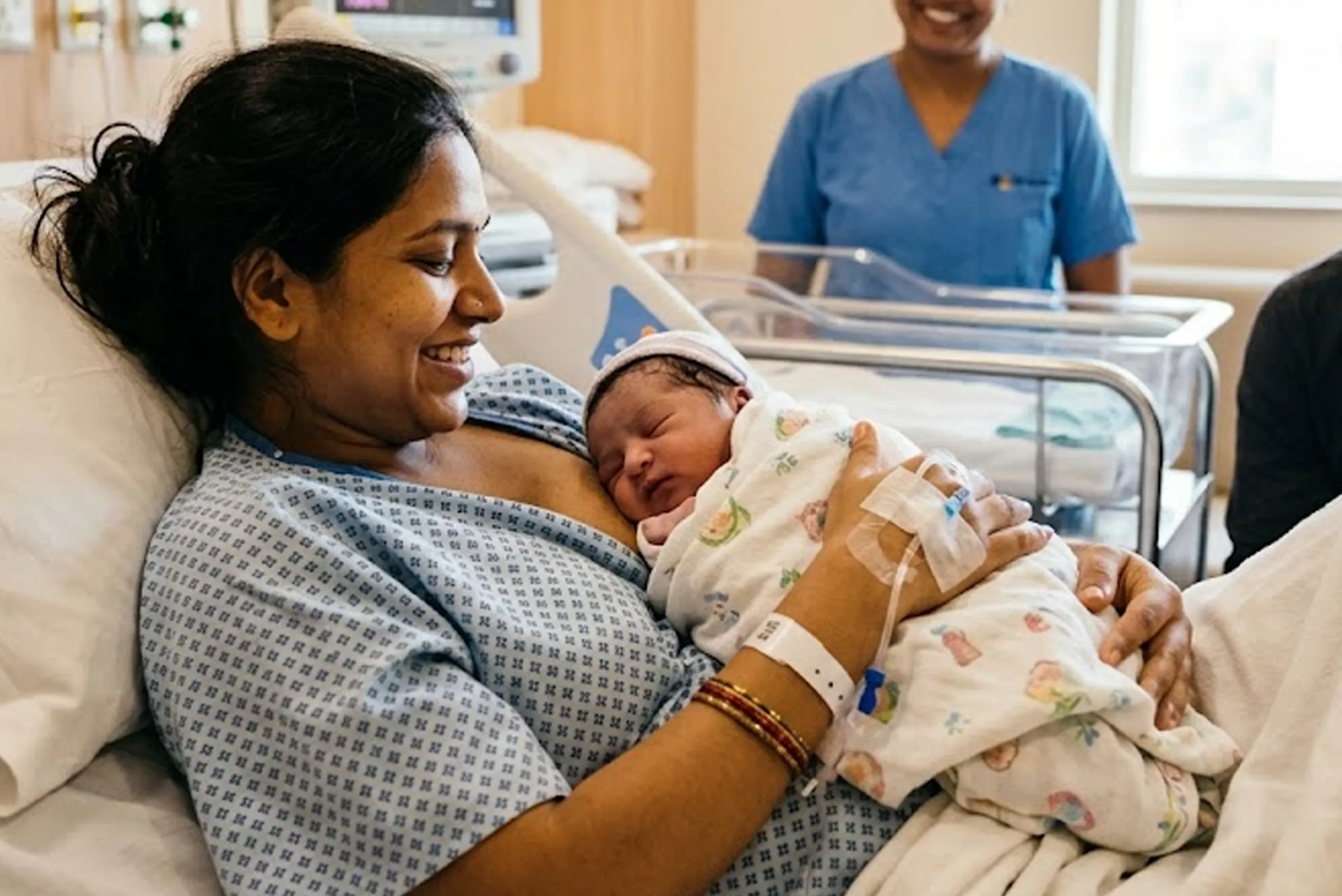
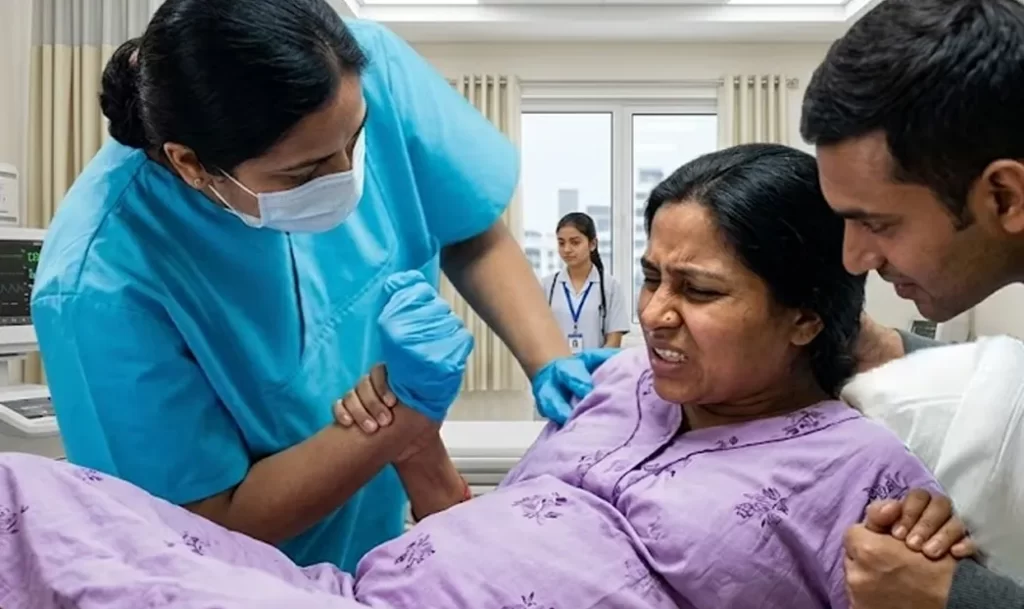
Painless delivery uses medically supervised epidural pain relief to reduce labour pain while allowing the mother to stay awake, aware, and emotionally present during birth. It supports a calmer labour experience without changing the natural purpose of vaginal delivery. At Galwa Care Hospital, Jodhpur, our obstetricians and anaesthesia team assess eligibility, monitor progress, and provide timely epidural care with strong safety protocols. For suitable mothers, it offers comfort, confidence, and better control through the birthing journey.

Are You Facing These Issues?

Free Consultation
from our Consultants

Every Mother Deserves to Choose Comfort

Who Should Consider Painless Delivery?

Painless delivery with epidural analgesia is suitable for a wide range of mothers and clinical situations. Your obstetrician and
anaesthesiologist at Galwa Care Hospital will assess your individual suitability during your pre-delivery consultation.

First-Time Mothers Anxious About Labour Pain

Women experiencing their first labour often have significant anxiety about the intensity of contractions. Epidural analgesia removes the fear of pain from the equation, allowing first-time mothers to be fully present and emotionally engaged throughout their birth experience.

Prolonged or Slow-Progressing Labour

For women experiencing prolonged labour, epidural analgesia allows the mother to rest, conserve energy, and remain calm during an extended first stage, arriving at the pushing phase refreshed and ready rather than physically and emotionally exhausted.

High-Risk Pregnancies Requiring Controlled Labour

For women with preeclampsia, certain cardiac conditions, or other high-risk medical situations, epidural analgesia reduces the cardiovascular stress of labour, offering both comfort and significant clinical benefit alongside effective pain management.

Women Who Have Previously Had Difficult Labours

Mothers who experienced traumatic or extremely painful previous deliveries often choose painless delivery for subsequent births to ensure a more positive, controlled, and emotionally comfortable experience this time around.

Mothers Considering VBAC

For women attempting Vaginal Birth After Caesarean (VBAC), epidural analgesia is often recommended as the catheter provides immediate access to surgical anaesthesia if an emergency C-section becomes necessary during labour.

Any Mother Who Simply Prefers Pain-Free Childbirth

Every woman has the right to choose how she experiences labour. Any mother who wishes for a significantly more comfortable birth experience, for personal or medical reasons, is a suitable candidate for painless delivery at Galwa Care Hospital.

Precisely Placed, Expertly Managed Throughout

The Painless Delivery Procedure

Epidural-supported painless delivery follows a careful clinical sequence, giving effective pain relief while preserving awareness, safety and emotional participation in birth.

Eligibility & Preparation

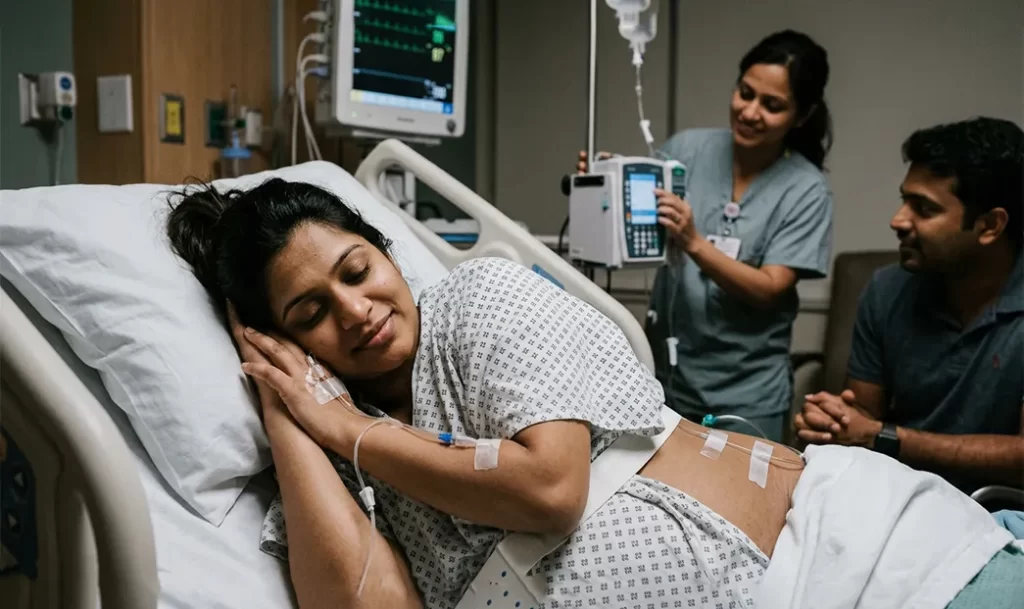
Your obstetrician and anaesthesiologist review labour progress, blood reports, medicines and health history. IV access and fetal monitoring are confirmed before epidural placement.

Safe Positioning

You are seated or placed on your side with the back gently curved. This position opens the lower spine spaces for precise, comfortable epidural catheter placement.

Cleaning & Local Numbing

The lower back is cleaned with antiseptic and numbed with local anaesthetic. Most mothers feel only a brief sting before the skin becomes comfortable.

Epidural Catheter Placement

A fine catheter is placed into the epidural space and secured to your back. The needle is removed, leaving only the soft catheter for controlled pain relief.

Test Dose & Pain Relief

A small test dose confirms correct placement, followed by the main medicine. Pain relief usually begins within 10–20 minutes and is adjusted as labour progresses.

Continuous Labour Monitoring

Mother’s blood pressure, oxygen level, contractions and baby’s heart rate are monitored throughout. Top-up doses are given when needed for consistent comfort.

Catheter Removal

After delivery, the epidural catheter is removed gently and the small site is covered. Leg sensation and strength return gradually over the next few hours.

Comfort, Control and Complete Presence

Benefits of Painless Delivery

Epidural analgesia for painless delivery delivers powerful, consistent, and adjustable pain relief while keeping the mother
fully present, emotionally engaged, and in control of her birth experience from beginning to end.

Most Effective Labour Pain Relief Available

Epidural analgesia provides the most reliable and powerful pain relief available during labour, far superior to any other pharmacological or non-pharmacological pain management method currently in use.

Mother Remains Fully Awake and Present

Unlike general anaesthesia, an epidural keeps the mother fully conscious and alert throughout labour, able to see, hear, and emotionally experience every moment of her baby's birth in real time.

Reduces Labour-Related Stress and Anxiety

By eliminating or dramatically reducing pain, an epidural significantly lowers the physiological stress response during labour, reducing adrenaline levels and allowing the body to labour more calmly and effectively.

Allows Rest During Long Labour

For women experiencing prolonged labour, epidural analgesia allows the mother to rest and conserve energy for the pushing stage rather than exhausting herself fighting through hours of severe pain.

Convertible to Surgical Anaesthesia if Needed

If an emergency C-section becomes necessary, the existing epidural catheter can be rapidly topped up with stronger anaesthetic, avoiding the time and risks associated with administering a new spinal block or general anaesthesia.

Fully Adjustable and Personalized Pain Control

The dose can be titrated up or down in response to the mother's comfort level and labour progress, providing genuinely personalized and flexible pain management throughout every stage of delivery.

Patient-Controlled Option Available

Where appropriate, Galwa Care Hospital offers Patient-Controlled Epidural Analgesia (PCEA), allowing the mother to self-administer small, safe top-up doses using a handheld button, giving her direct control over her own comfort.

Clinically Beneficial in High-Risk Cases

For women with preeclampsia or certain cardiac conditions, epidural analgesia reduces the cardiovascular stress of labour, providing both comfort and meaningful clinical benefit beyond pain management alone.

Supports a More Positive Birth Experience

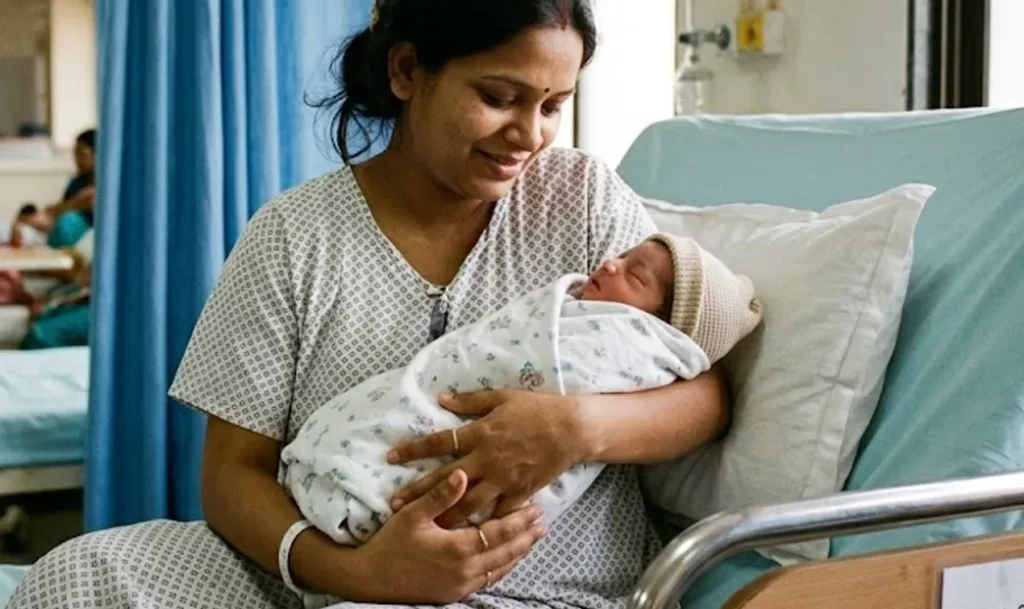
Mothers who deliver with effective pain relief consistently report more positive birth experiences, a greater sense of control and empowerment, and stronger early emotional bonding with their newborn immediately after birth.

Safe for Both Mother and Baby

When administered and monitored by a trained obstetric anaesthesiologist, epidural analgesia is safe for both mother and baby. The medication used does not cross the placenta in clinically significant amounts and fetal monitoring continues throughout.

Prepare Well, Labour with Confidence

Painless Delivery — Do's and Don'ts

Following these recommendations before and during your painless delivery will support the safest epidural experience,
the most effective pain relief, and the smoothest possible labour and postpartum recovery.

DO'S — What You Should Do

Attend a pre-delivery anaesthesia consultation to discuss epidural suitability and what to expect.

Remain as still as possible during the epidural placement procedure for the safest and most accurate insertion.

Remain as still as possible during the epidural placement procedure for the safest and most accurate insertion.

Communicate your comfort level honestly throughout labour so the dose can be adjusted as needed.

Stay well-hydrated throughout early labour before the epidural is placed to support blood pressure stability.

Ask for the epidural early in active labour rather than waiting until pain is completely unmanageable.

Allow nursing staff to assist you with repositioning until full leg sensation and strength returns after delivery.

Begin gentle walking as soon as sensation fully returns to your legs after the catheter is removed.

Initiate skin-to-skin contact and breastfeeding as soon as possible after delivery while alert and present.

Attend your 6-week postnatal check including pelvic floor assessment and emotional wellbeing review.

DONT'S — What You Should Avoid

Do not move suddenly or try to reposition during the epidural needle insertion procedure.

Avoid eating a large heavy meal once you are in established active labour and an epidural is planned.

Do not stand or walk unsupported until full leg strength and sensation have completely returned.

Avoid dismissing side effects such as shivering or itching without informing your nursing team.

Do not feel pressured to manage without pain relief if you are finding labour significantly distressing.

Avoid delaying your epidural request until very late labour as there may not always be sufficient time.

Do not compare your labour experience with others as every woman's response to an epidural varies.

Avoid assuming an epidural will completely prevent all sensation as some pressure will be preserved.

Do not skip your postnatal appointments even if you feel well as recovery monitoring remains important.

Avoid dismissing postpartum emotional concerns as feelings of anxiety or low mood deserve specialist support.

Specialist Expertise, Available Around the Clock

A Mother Who Is
Comfortable Is a
Mother Who Is
Fully Present

Specialist obstetric anaesthesiologists with extensive epidural placement expertise for labour analgesia

24/7 epidural availability because labour does not follow a schedule and neither does our commitment

Continuous one-to-one labour support from skilled midwives and obstetric nurses throughout

Advanced CTG monitoring, pulse oximetry, and continuous blood pressure assessment throughout epidural labour

Patient-Controlled Epidural Analgesia (PCEA) available for direct personal control over pain management

Seamless emergency readiness with rapid epidural-to-surgical anaesthesia conversion capability if needed

Comprehensive postpartum care including wound care, lactation support, and emotional wellbeing screening

2000+

Eggs Successfully Frozen

98%

Vitrification Survival Rate

15+

Years of Experience

24/7

Support to Call

Comfort Is Worth Every Rupee, Clearly Priced

How Much Does Painless Delivery Cost?

The cost of painless delivery with epidural analgesia at Galwa Care Hospital includes the anaesthesiologist's professional fee, the epidural medications and equipment used, continuous anaesthesia monitoring throughout labour, and all standard maternity care. All pricing is communicated clearly and transparently upfront with no hidden charges.

Easy EMI Facility Available

Obstetric anaesthesiologist consultation

Epidural placement procedure fee

Medications and epidural equipment

Continuous anaesthesia monitoring

Standard labour ward and nursing care

Postpartum recovery and follow-up

Easy EMI Facility Available

Shape Image

Painless Delivery Questions, Clearly Answered

Frequently Asked Questions.

Yes. When administered and monitored by a trained obstetric anaesthesiologist, epidural analgesia is safe for both mother and baby. The medication used does not cross the placenta in clinically significant amounts and fetal heart rate is continuously monitored throughout epidural labour. In most cases, yes, you will be able to push effectively. Modern low-dose epidural protocols are specifically designed to reduce pain while preserving enough sensation and pressure for the mother to feel the urge to push. Our anaesthesiology team at Galwa Care Hospital carefully titrates the dose to maintain effective pushing ability during the second stage of labour.

An epidural can be placed at any point during established active labour, typically from around 4 centimetres of cervical dilation onwards once active contractions are confirmed. If you are considering painless delivery, it is advisable to request the epidural early in active labour rather than waiting until pain becomes completely unmanageable. The procedure of siting an epidural typically takes 10 to 20 minutes from start to finish. You will be asked to remain very still during placement, which our nursing team and anaesthesiologist will guide you through carefully and reassuringly.

Epidurals are highly effective in the vast majority of cases, but occasionally pain relief may be uneven or incomplete, a situation known as a patchy block. If this occurs, our anaesthesiologist at Galwa Care Hospital will adjust the catheter position or medication dose to improve coverage and ensure adequate relief. In rare cases, the epidural may need to be resited. Our team takes responsibility for your comfort throughout labour and will not consider the procedure complete until you are experiencing the level of relief that was promised and expected.

Research shows that modern low-dose epidurals do not significantly prolong the first stage of labour. They may occasionally extend the pushing phase slightly, but our obstetric team at Galwa Care Hospital manages labour progress closely to minimise any impact on overall delivery timing. You are completely free to request an epidural at any point during your labour even if you initially declined, and as long as labour has not progressed too far and there are no contraindications, our anaesthesiology team will accommodate your request as quickly as possible. Other pain relief options including Entonox, IV analgesia, warm water therapy, and breathing techniques are also available, though none provides the same consistent, complete relief as an epidural.

Yes, in many cases. If you are being supported for a VBAC at Galwa Care Hospital, epidural analgesia is generally compatible and may even be recommended, as the catheter provides immediate access to surgical anaesthesia if an emergency C-section becomes necessary during labour. The epidural leaves no visible scar. The only mark is a tiny skin entry point in the lower back covered with a simple dressing after catheter removal, which heals completely within days. There is no lasting visible sign of the epidural procedure on the skin or the back after recovery is complete.

Appointment Request Form

Care Packages for Every Stage

Take the First Step Towards Better Care

Schedule your personalized consultation at Galwa Care Hospital to experience medical expertise combined with compassionate support for every patient journey
GALWA CARE