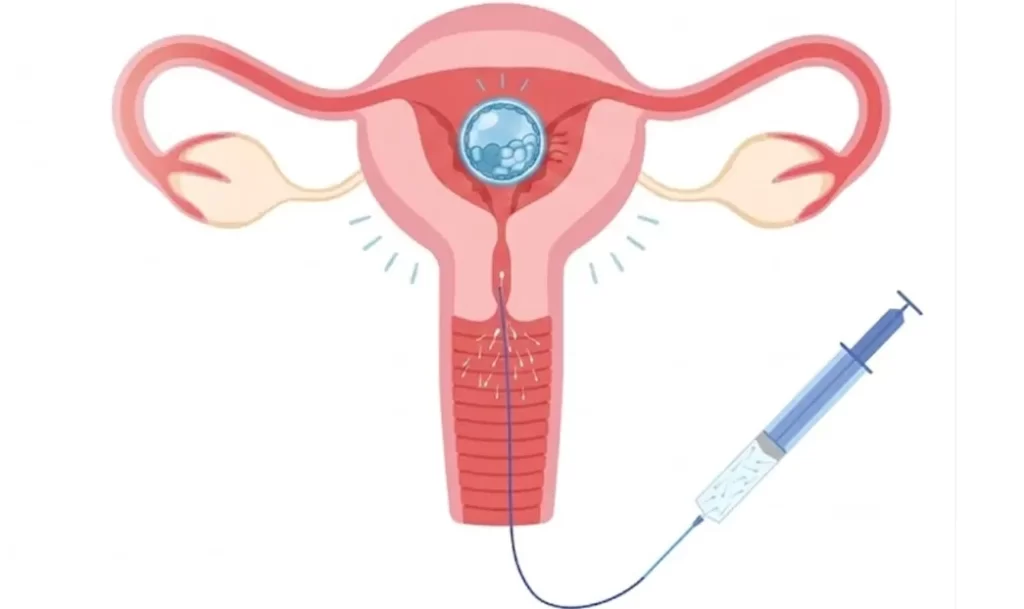
Advanced IVF, IUI & ICSI treatments with highest success rates — compassionate care for every step of your fertility journey.
State-of-the-art IVF lab, experienced embryologists and personalised protocols for the best possible outcomes.
Comprehensive care across pregnancy, fertility and advanced gynaecology — delivered with privacy, safety and compassion.
15+ years of expertise, advanced labs and personalised treatment plans.
Advanced facial & body cosmetic procedures by expert surgeons — natural results, minimal downtime, maximum confidence.
Board-certified surgeons delivering natural, beautiful results with the latest techniques.
Expert reconstructive & plastic surgery for hand, birth deformities, cancer reconstruction and trauma — restoring form and function with precision.
Advanced body contouring, breast surgeries & intimate procedures by expert surgeons — natural results, renewed confidence.
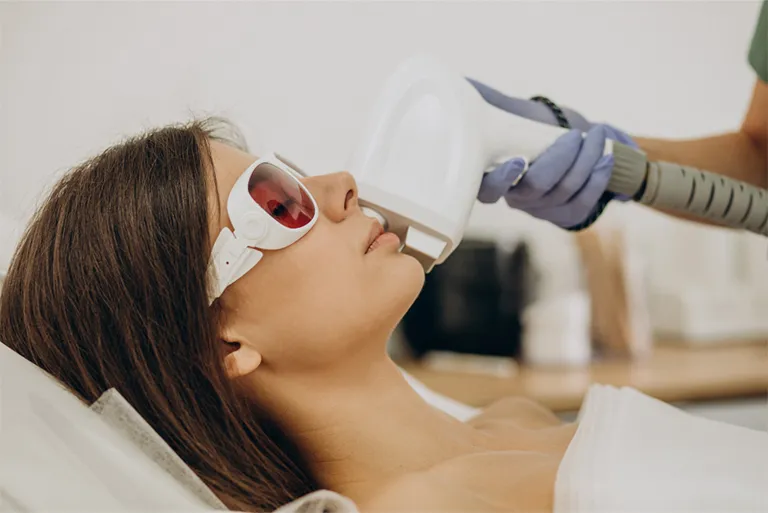
Advanced laser skin treatments, intimate wellness procedures & expert hair restoration — all under one roof.
State-of-the-art laser tech & hair restoration by certified specialists.
Comprehensive fertility, hormonal & genetic diagnostics for females and males — accurate, fast and confidential.
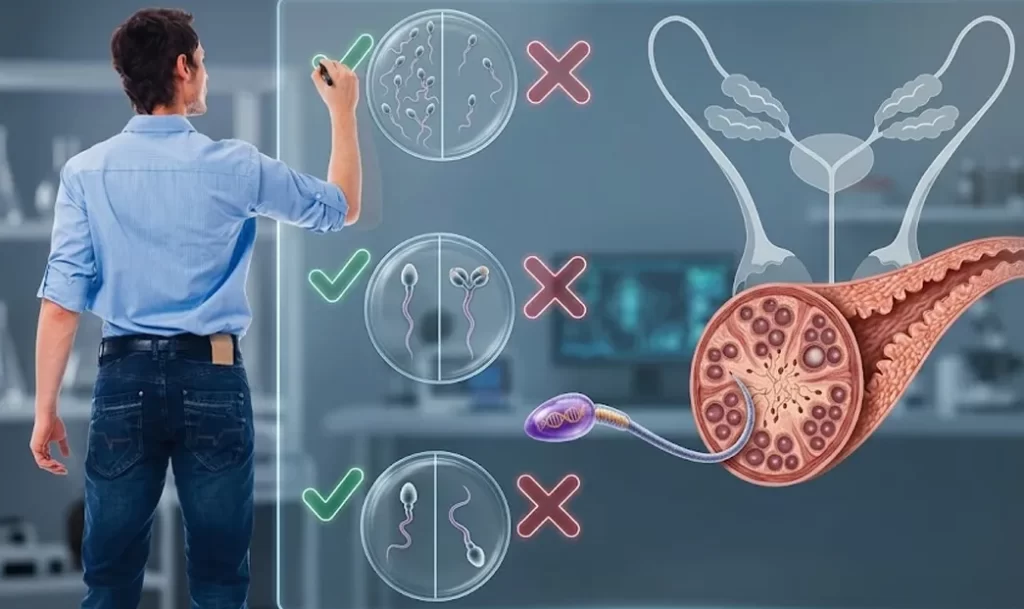
Sperm function testing looks beyond sperm count to assess how well sperm can fertilise an egg and support embryo development.
At Galwa Care Hospital, it is useful when semen analysis appears normal but conception or IVF success remains difficult.
The results help guide advanced sperm selection, ICSI planning and personalised fertility treatment.
When a couple has been unable to conceive despite a normal semen analysis and no identifiable female factor, sperm function testing frequently reveals hidden biological barriers including DNA fragmentation, membrane dysfunction, or anti-sperm antibodies that standard parameters cannot detect.
When multiple assisted reproduction cycles have failed without a clear explanation, advanced sperm function testing identifies the specific functional or molecular defects in sperm that may be preventing fertilization, impairing embryo development, or contributing to implantation failure.
Elevated sperm DNA fragmentation is increasingly recognised as a significant contributing factor in repeated early pregnancy loss. When recurrent miscarriage investigations have not identified a clear female cause, sperm DNA fragmentation testing provides an important additional diagnostic dimension.
When semen analysis shows a very high proportion of abnormally shaped or immotile sperm, sperm function testing including the HOS test and electron microscopy identifies whether structural or membrane-level defects are responsible, guiding the most appropriate assisted reproduction approach.
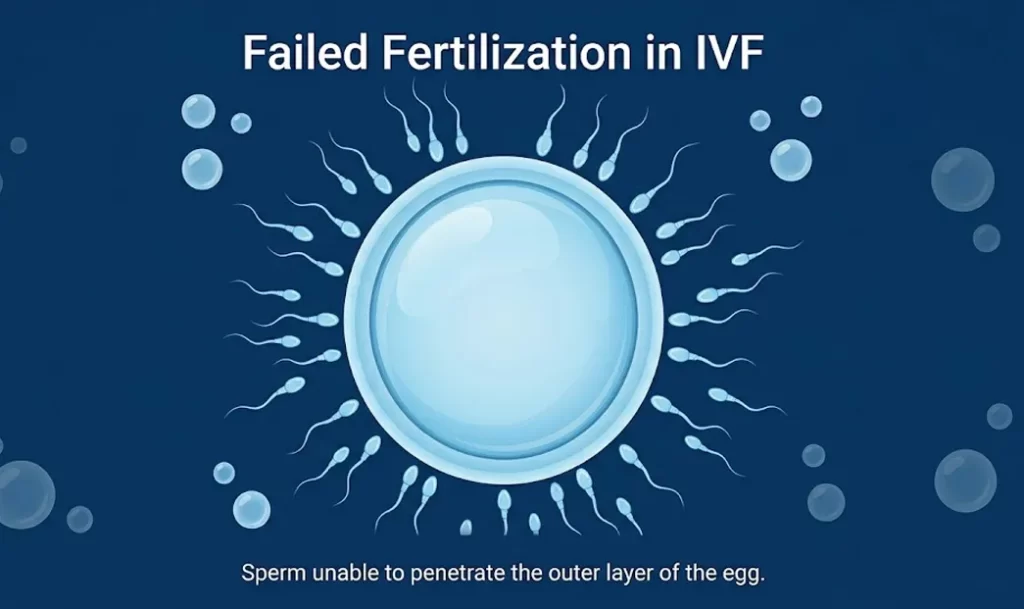
When an IVF cycle produces good quality eggs but fertilization rates are consistently low or absent, sperm function testing including anti-sperm antibody testing and molecular diagnostics investigates the sperm-side factors contributing to the fertilization failure.
When hormonal profiling and semen analysis have not fully explained a man’s infertility, sperm molecular testing for oxidative stress, reactive oxygen species, mitochondrial dysfunction, and Y-chromosome microdeletions provides the next level of diagnostic insight needed.
Evaluates the functional integrity of the sperm cell membrane by placing sperm in a hypo-osmotic solution. Healthy sperm with an intact membrane swell and show tail curling..
Measures the percentage of sperm carrying breaks or damage in their DNA using TUNEL assay or Sperm Chromatin Structure Assay (SCSA). A result below 15% is considered.
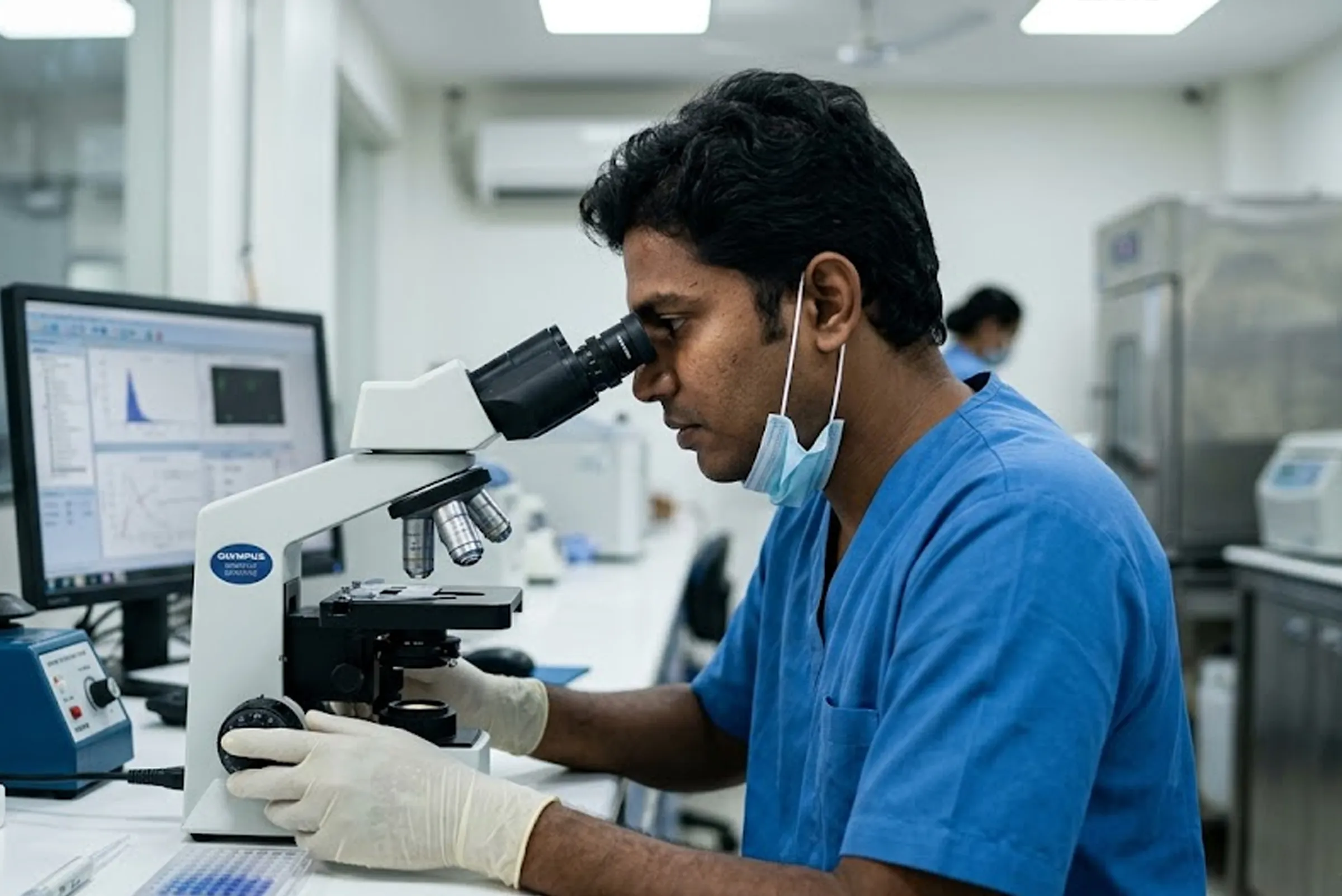
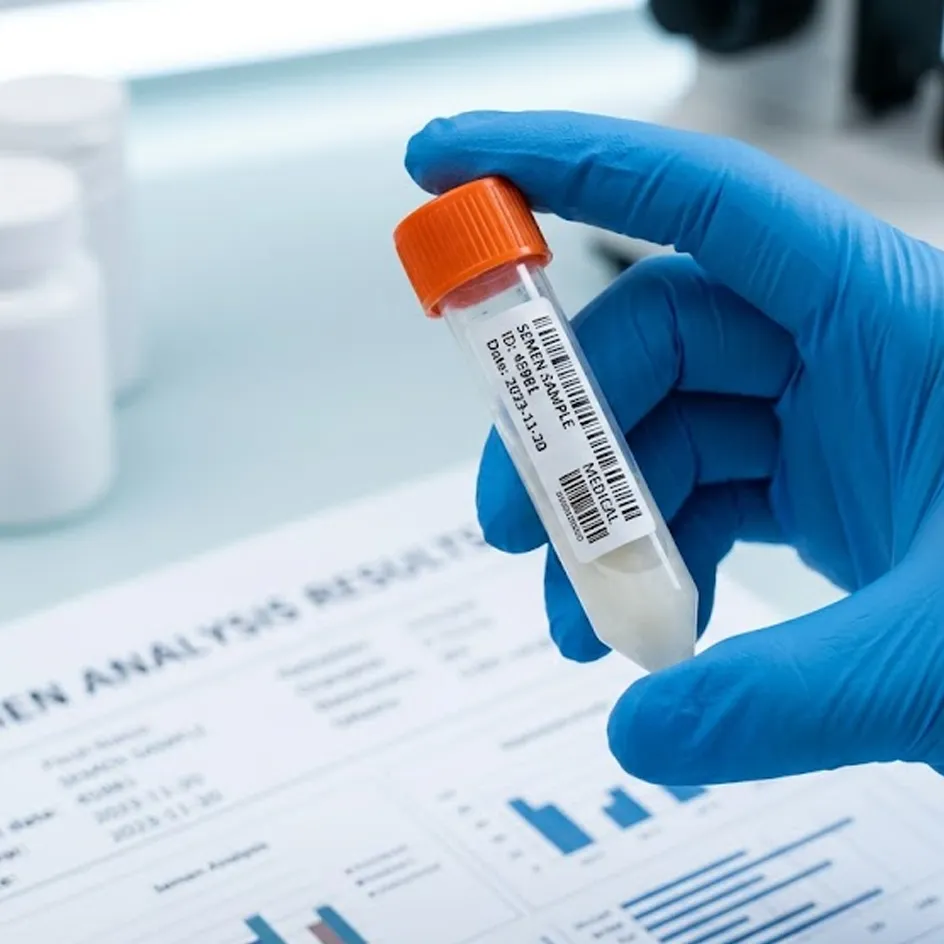
The laboratory measures key fertility parameters and prepares clinically useful results for specialist interpretation.
The most detailed method of examining sperm structure, magnifying up to 200,000 times to reveal internal components including the axoneme, mitochondrial sheath, acrosome, and nuclear chromatin. Invaluable.
The laboratory measures key fertility parameters and prepares clinically useful results for specialist interpretation.
Your results are reviewed by the specialist and converted into a clear, personalised next-step plan.

Sperm DNA fragmentation, membrane dysfunction, anti-sperm antibodies, and structural ultra-abnormalities are entirely invisible to standard semen analysis but are identified through sperm function testing with clinical precision.

For couples with no identifiable cause of infertility after standard investigations, sperm function testing frequently provides the missing diagnostic piece, replacing the frustration of unexplained infertility with a confirmed, actionable diagnosis.

When multiple IVF cycles have failed without explanation, advanced sperm function testing identifies the specific sperm-side biological barrier that has been preventing successful fertilization or healthy embryo development across multiple attempts.

The HOS test identifies live but non-motile sperm that would otherwise be discarded, ensuring that embryologists select only genuinely viable sperm for ICSI injection, directly improving fertilization rates in cycles with severely compromised sperm motility.

DNA fragmentation and functional testing results directly guide the decision to use IMSI, PICSI, microfluidic sperm sorting, or surgical sperm retrieval, selecting the most appropriate sperm selection method for each specific case.

Identifying and treating elevated sperm DNA fragmentation through antioxidant therapy, lifestyle modification, or surgical retrieval of testicular sperm with lower fragmentation directly reduces the risk of early pregnancy loss in subsequent attempts.

Anti-sperm antibody testing identifies an immunological cause of infertility that can be specifically addressed with corticosteroid therapy or assisted reproduction, providing a treatment pathway that direct sperm count optimisation alone cannot offer.

Electron microscopy reveals internal sperm structural disorders including axonemal defects and acrosomal abnormalities that explain severe motility failure or fertilization inability that no other available diagnostic test can characterise.

Oxidative stress and ROS testing quantifies the degree of free radical damage to sperm, enabling precisely targeted antioxidant supplementation and dietary intervention that directly addresses the confirmed molecular cause of sperm dysfunction.

Combined with semen analysis and hormonal profiling, sperm function testing completes the most comprehensive male fertility diagnostic evaluation available, ensuring no biological barrier to conception remains unidentified or unaddressed.


Eggs Successfully Frozen

Vitrification Survival Rate

Years of Experience

Support to Call

A semen analysis measures basic external parameters including sperm count, motility, and morphology. Sperm function tests go significantly deeper, assessing whether sperm can actually fertilize an egg at a biological and molecular level, including the integrity of their DNA, the functionality of their cell membranes, the presence of immune antibodies on their surface, and internal structural abnormalities. Men with unexplained infertility, repeated IVF or IUI failures, recurrent pregnancy loss, a normal semen analysis but persistent inability to conceive, or severely abnormal morphology or immotility should strongly consider comprehensive sperm function testing at Galwa Care Hospital.
Yes. Elevated sperm DNA fragmentation is a treatable condition in the majority of cases. Treatment approaches include targeted antioxidant supplementation with vitamin C, vitamin E, and coenzyme Q10, smoking cessation, alcohol reduction, treating any identified genital tract infection, varicocelectomy for varicocele-related oxidative damage, and in cases of very high fragmentation, surgical testicular sperm retrieval where testicular sperm typically carry significantly lower DNA damage than ejaculated sperm. DNA fragmentation is measured using established laboratory methods including the TUNEL assay or Sperm Chromatin Structure Assay (SCSA), which calculate the precise percentage of sperm in the sample with broken or damaged DNA strands.
The HOS test is particularly critical for ICSI because it differentiates between dead sperm and live but non-motile sperm, a distinction that is essential when the embryologist must select a single viable sperm for direct injection into each egg. Non-motile sperm that swell positively in the HOS test are confirmed alive and can be successfully used in ICSI with good outcomes. No, sperm function tests are not painful or invasive. All tests require only a standard semen sample collected by masturbation in a private collection room at Galwa Care Hospital, exactly the same process as a routine semen analysis, with no injections, procedures, or physical discomfort involved at any stage.
Yes on both counts. Anti-sperm antibodies can be addressed through corticosteroid therapy to suppress immune antibody production, IUI with specially washed sperm to reduce the antibody load, or IVF with ICSI to bypass the cervical and zona-level barriers that antibody-coated sperm cannot overcome. Women can also develop anti-sperm antibodies, making ASA testing relevant for both partners in some cases. Oxidative stress in sperm is one of the most common and most responsive causes of sperm dysfunction. It can be meaningfully reduced through targeted antioxidant supplementation, smoking cessation, alcohol reduction, weight management, varicocelectomy, treatment of genital infections, and reducing environmental toxin exposure over 2 to 3 months.
Turnaround time varies by test type. Basic function tests including the HOS test and anti-sperm antibody testing are typically available within 24 to 48 hours. Sperm DNA fragmentation results are generally available within 2 to 3 working days. Advanced molecular tests including oxidative stress, ROS assessment, and Y-chromosome microdeletion analysis may take 3 to 7 working days. Yes, Galwa Care Hospital offers the complete range of sperm function tests from HOS and DNA fragmentation through to electron microscopy, anti-sperm antibody testing, and sperm molecular diagnostics, all under one roof with expert andrological interpretation and personalised treatment planning available without the need to visit multiple diagnostic centres.